Today we are very excited to share an interview with Author Carolyn Sloan (Welcome to the Opera)!
Meet the Author: Carolyn Sloan
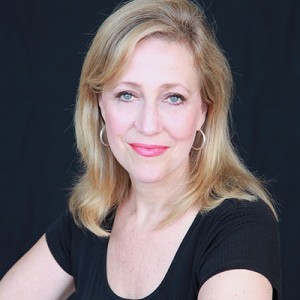
Carolyn Sloan is the author of Welcome to the Symphony and Welcome to Jazz. A music educator, songwriter, and musician, she writes music for theater, television, and children. She is also the founder of the online education company, TeachMe TV. She lives in Brooklyn, New York, with her family.
Website * X * Instagram * Facebook
About the Book: Welcome to the Opera
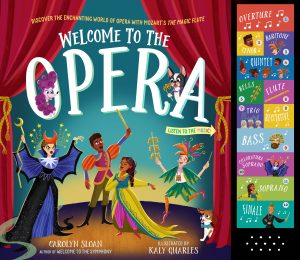
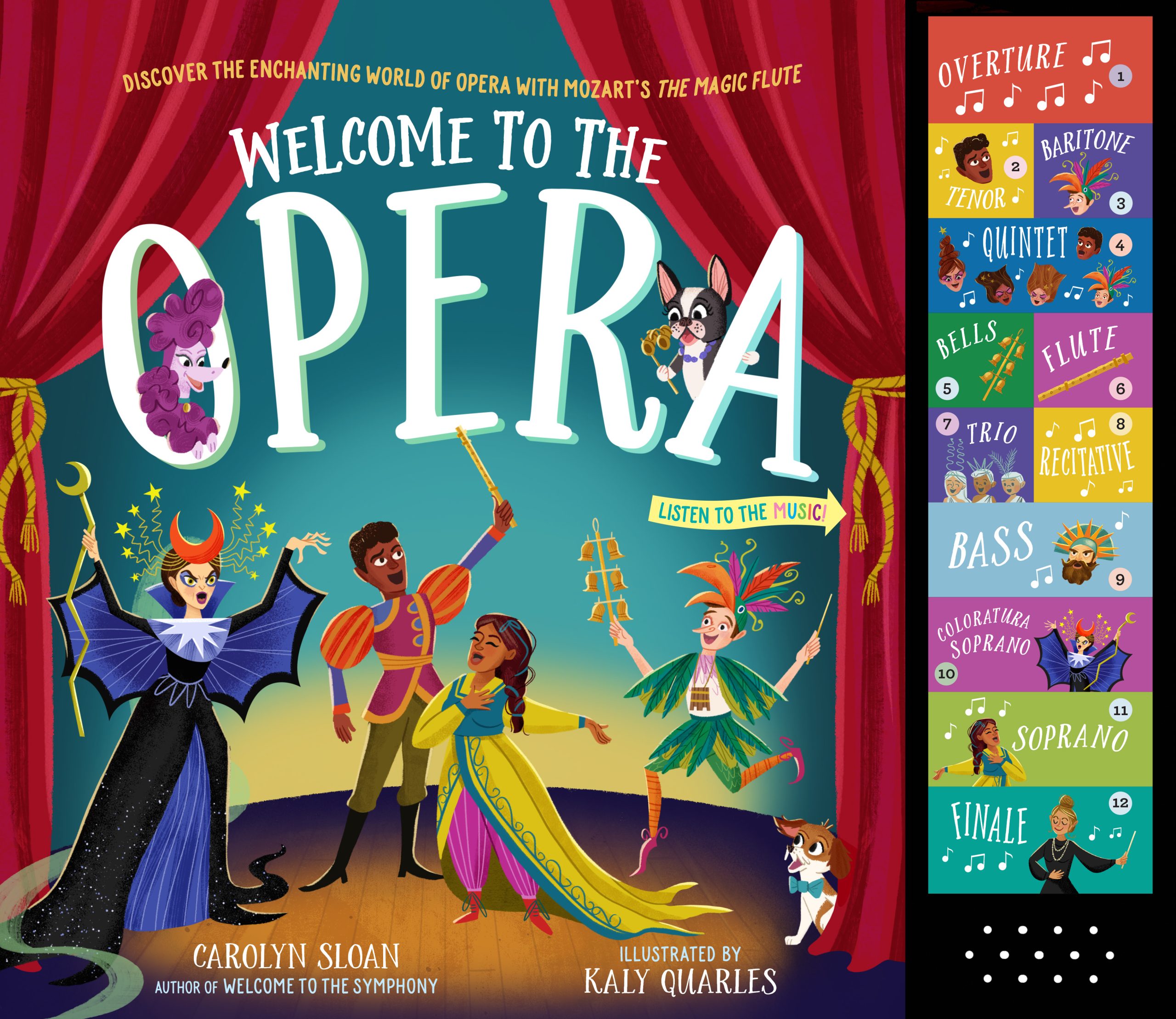
From the author of Welcome to the Symphony and Welcome to Jazz, this musical picture book introduces children to opera with 12 sound interactive buttons and an illustrated performance of Mozart’s The Magic Flute.
Join three adorable dogs for a performance of Mozart’s beloved masterpiece The Magic Flute in this illustrated introduction to opera—with 12 sound buttons! As the story unfolds readers learn about the essential parts of opera—voice parts like soprano and tenor; vocal techniques like recitative and melisma; arias, the orchestra, the chorus, sets, costumes, plot, and more.
Plus, 12 interactive sound buttons let readers hear examples of the musical concepts as they read: a soprano sings a heartfelt aria, a powerful bass sings recitative, and the chorus harmonizes during the dramatic finale!
Welcome to the Opera is the third title in music educator Carolyn Sloan’s successful Welcome to… sound chip picture book series that introduces classic musical genres to young readers.
Amazon * B&N * IndieBound
~Author Chat~
YABC: What gave you the inspiration to write this book?
For many years I taught music at an Independent School in Brooklyn. I was responsible for teaching the second, third and fourth graders. Every spring, I would assign my fourth graders the task of becoming an expert on one orchestral instrument. They in turn would have 3 months to research their instrument by a variety of means, reading, talking to instrumentalists, watching a concert, visiting a symphony, etc. After they concluded their research, the students would have to present their research to the class in a creative project. It was epic.
Through this assignment, I learned that out of 53 fourth graders only 3 had ever seen a symphony or any kind of classical concert, including a theater piece such as an opera. I wondered, How could this be? These children live in New York City. They come from families who can afford to take them to a concert. And even if not, there are so many concerts that are designed for families, with affordable tickets.
I set out on a mission to put a concert in a book, if not only to whet families’ appetites for great music, but to make it accessible, fun, and exciting to learn what music is all about. You can’t teach music without examples of music, so I decided to make it interactive. That’s how Welcome to the Symphony and the whole series of Welcome to books came about, including Welcome to the Opera. Opera is a special case too, because so many people are intimidated by Opera. But when you introduce something like symphonic music or opera to kids, you have a chance of demystifying it and developing a lifelong love of the artform by giving them small ‘bites’ of information embedded in rich media, like beautiful illustrations and relevant sound files. That’s exciting to me – Making music accessible to all.
YABC: How do you know when a book is finished?
This is a challenging question for me. I never think anything is finished. I tend to be perfectionistic about a lot of things, including my work. But if I had to choose a time when I feel that a work is finished, it’s when I can read through the whole book and not feel like I need to correct something or edit something. When I feel the rhythm is right, and the words flow as they should. When I feel I have said what I set out to say and it’s clear to me as well as my editor, that’s a good time to say it’s finished. I can’t overstate how important a good editor can be. They can really make or break a book.
YABC: What research did you do to write this book?
I went to see the Magic Flute at the Metropolitan Opera. I read through the score and libretto many times. I watched the video of a Met production and talked to many, many singers, and musicians about the opera. I read about Mozart and researched what his life was like at the time he was writing this. I talked to families about opera and what they felt about listening to great music on the stage. It was a lot of fun. Research is one of my favorite parts of writing a book. It’s a time of great exploration and all the possibilities lie in front of you waiting to be realized.
YABC: When did you know you wanted to be a writer?
I was always making up stories ever since I was a kid. I loved words and started writing in third grade. My first story was about Skippy the peanut who didn’t want to live in a jar of peanut butter. He wanted to be free. It won a creative writing contest at my school, and the local paper published it as part of a school initiative. I had teachers that encouraged me and told me I had an ability to communicate well. That was important because at an early age, I was encouraged be creative. Music was important in my life and helped develop my writing. In many ways music and language are very similar. They both are rhythmic, melodic and communicate emotions, and tell a story.
Over time, I slowly realized that the happiest times for me, were sitting at my desk writing a song, a poem, or a story. I loved the other side of the table, meaning, I loved being the person who created the work, not the person who performed the work. Being a writer suits my personality, in that I am very introspective. I like quiet. I like to be alone. But I also love people and communicating and working with children. Writing books for children brings it all together for me.
YABC: How do you keep your ‘voice’ true to the age category you are writing within?
All I need to do is imagine I am standing in a classroom, teaching my students. I see them in my mind, and wonder: How do I engage them? Will they think this is funny? Is this too wordy? What kinds of questions do I ask here? Having children’s eyes and ears in my mind is the best way to keep it kid-friendly and maintain a childlike wonder in the telling of a story or explaining a concept. Sometimes I would actually bring in a page or a scene to my classroom when I was teaching and read it to them. If they got bored or looked away, I knew I had to start over. Kids never lie.
YABC: How did you celebrate the launch of your book?
The book was released to stores on October 10. I had a wonderful party at my home complete with opera singers singing arias from The Magic Flute. Close friends and colleagues celebrated with me. We toasted, ate good food and indulged in opera cake too. Some of my students I used to teach joined the celebration. It was lovely.
YABC: What’s your least favorite word or expression and why?
“Nice. It’s nice.” I absolutely abhor that word. It’s bland. It’s utilitarian and it’s usually a passive way of saying the opposite- meaning, someone doesn’t like something or has nothing good to say.
YABC: What do you do when you procrastinate?
Anything. I’ll do anything and everything but what I’m supposed to be doing. I’ll get up from my desk. I’ll go take a walk. I’ll pick up my phone. I’ll clean the house. I’ll do the laundry!! Anything, but doing what I need to do. With that said, I do try very hard to not procrastinate. But no one’s perfect. J
YABC: What other age group would you consider writing for?
I’ve already written an adult non-fiction book, so I think there’s another one I’d like to write for adults at some point. I’m not sure what the topic or topics might be, but it’s germinating now. Most likely it will be education focused. I’d also consider writing for the next age group up. The Y/A crowd. I love being around young people and am fascinated by how they perceive the world and what is important to them.
YABC: What’s up next for you?
I’m not sure exactly. I think there’s one more book to do in the Welcome to… series. I’ve always been in love with theater, especially musical theater. I’ve written several scores and songs for shows too, so I could see a Welcome to Broadway book. When I mention that idea to my readers, they get very excited. Broadway has a rich history too, and it would be a great challenge to feature a myriad of shows and song styles. I’d be excited to set it in my home city of New York and Times Square would be so much fun. I have a great idea for which animals to tell the story. But to find out, you’ll have to wait to read the book!
Title: Welcome to the Opera
Author: Carolyn Sloan
Illustrator: Kaly Quarles
Release Date: 10/10/23
Publisher: Workman Kids
Genre: Nonfiction
Age Range: 4-8