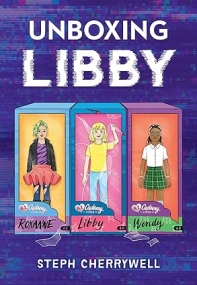
Max isn't always sweet and bubbly. That wouldn't be an issue except for the fact that she's programmed to be. "Max" isn't even her real name. She's a Libby– one of the most popular A.I.Cademy Girl social robots, which top the sales charts for girls ages eight to twelve. They look almost human and there’s a companion to fit every personality. Wendys are smart. Robins are sporty. Noras are artistic. And Libbys? As the box they come in says: Always chipper, cheerful, and sweet, Libby(TM) makes the perfect friend.
- Books
- Middle Grade Fiction & Indies
- Middle Grade Fiction
- Unboxing Libby
Unboxing Libby
Author(s)
Genre(s)
Age Range
8+
Release Date
April 01, 2025
ISBN
978-0316577090
AI meets American Girl Dolls in this quirky novel about a group of preteen androids who have been cast aside and have to make their own way in the world.
But despite her packaging and her programmed memories, Max is feeling the opposite of perfect. The only thing she wants to know is why. But this question uncovers bigger answers than she bargained for – like the shocking fate of the other A.I.Cademy Girls, and what the founders of their idyllic community are really hiding. Max may not be the perfect Libby, but she’ll have to embrace what makes her uniquely Max to save herself and her friends before they're all sent to the junkyard.
Editor review
1 review
Think for Yourself
(Updated: June 24, 2026)
Overall rating
4.3
Plot
4.0
Characters
5.0
Writing Style
4.0
Illustrations/Photos (if applicable)
N/A
What worked:
The book introduces characters uniquely, as Libby is literally unboxed in the first chapter. She’s a new Libby robot, and she downloads memories of her “life” and her mother, another robot version called Nora. Despite being robots, the characters mostly sound and act like humans. This makes the story relatable to young readers, even though most of the characters are androids living on Mars. The idea is for the androids to simulate the role of humans living on the planet to figure out potential problems for future settlers. Interpersonal drama ensues.
The androids have preprogrammed appearances and personalities, with Libbys being the nicest and Roxannes being snobby and mean. Libby is the newest robot to start school, and the other Libbys give her the nickname Max. The story becomes more intriguing when Roxanne points out that Max is not behaving like other Libbys. Everyone expects her to make others happy, but Max begins thinking more independently. The human doctor and Roxanne are shocked when Max reveals she can cross The Boundary. This invisible line is supposed to keep robots from entering areas restricted to humans. It’s the biggest sign that Max’s programming works much differently than was intended. The evolution of Max’s character is a highlight.
This book offers an innovative perspective on life among adolescents. The characters represent stereotypical personas someone might find in middle school. No one wants to be friends with Roxanne, although Max is the exception in this story. The characters interact based on their programming, and some don’t adapt well when things don’t go as expected. Just Libby is especially sensitive to the changes. However, other characters become more creative once they sense encouragement.
What didn’t work as well:
The author inserts pages describing the different kinds of robots early in the book, which helps to understand them. Other pages later in the book describe interviews and advertisements for them and for settling on Mars. The later pages aren’t as helpful and aren’t necessary.
The final verdict:
An important message in the story is to think for yourself. The atmosphere of the story is reminiscent of the confusing years of middle grades, but the setting and conflict make it unusual. It’s a thought-provoking book, and I recommend you give it a shot.
The book introduces characters uniquely, as Libby is literally unboxed in the first chapter. She’s a new Libby robot, and she downloads memories of her “life” and her mother, another robot version called Nora. Despite being robots, the characters mostly sound and act like humans. This makes the story relatable to young readers, even though most of the characters are androids living on Mars. The idea is for the androids to simulate the role of humans living on the planet to figure out potential problems for future settlers. Interpersonal drama ensues.
The androids have preprogrammed appearances and personalities, with Libbys being the nicest and Roxannes being snobby and mean. Libby is the newest robot to start school, and the other Libbys give her the nickname Max. The story becomes more intriguing when Roxanne points out that Max is not behaving like other Libbys. Everyone expects her to make others happy, but Max begins thinking more independently. The human doctor and Roxanne are shocked when Max reveals she can cross The Boundary. This invisible line is supposed to keep robots from entering areas restricted to humans. It’s the biggest sign that Max’s programming works much differently than was intended. The evolution of Max’s character is a highlight.
This book offers an innovative perspective on life among adolescents. The characters represent stereotypical personas someone might find in middle school. No one wants to be friends with Roxanne, although Max is the exception in this story. The characters interact based on their programming, and some don’t adapt well when things don’t go as expected. Just Libby is especially sensitive to the changes. However, other characters become more creative once they sense encouragement.
What didn’t work as well:
The author inserts pages describing the different kinds of robots early in the book, which helps to understand them. Other pages later in the book describe interviews and advertisements for them and for settling on Mars. The later pages aren’t as helpful and aren’t necessary.
The final verdict:
An important message in the story is to think for yourself. The atmosphere of the story is reminiscent of the confusing years of middle grades, but the setting and conflict make it unusual. It’s a thought-provoking book, and I recommend you give it a shot.
User reviews
There are no user reviews for this listing.
Already have an account? Log in now or Create an account