The Blossoming Summer

 
3.9 (3)
 
5.0 (1)
478 0
81WgaL+jK5L
Publisher
Age Range
8+
Release Date
July 29, 2025
ISBN
978-0823458530
Buy This Book
     
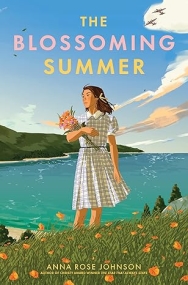
When English thirteen-year-old Rosemary is evacuated to her grandmother in America at the start of World War II, she uncovers the family secret—they are Anishinaabe and passing as white.

Life in England is all Rosemary has ever known. . . but as WWII changes the world, no one’s life is left unscathed. Suddenly, she’s sent away to escape the devastation of London. Her grandmother’s house on Lake Superior is safe, but unfamiliar, especially as she discovers her parents have kept a tremendous secret.

Rosemary and her family are Anishinaabe—and no one is supposed to know.

Far from home but newly connected to a once-hidden part of her family, Rosemary develops a warm, close relationship with her grandmother… and a local boy whose love of gardening helps her to see the beauty in her unexpected circumstances. As Rosemary grows into her new life like a flower in bloom, she realizes that maybe she’s not as far from home as she thought.

Tender, sophisticated, and sweet, this is a beautiful story about memory, family, and identity. Rising Ojibwe author Anna Rose Johnson addresses the trauma of World War II and the legacies of hidden indigeneity alongside coming-of-age milestones like first crushes, new schools, and beginning to imagine the life you want. Hand The Blossoming Summer to fans of Christine Day, L.M. Montgomery, and Kimberly Brubaker Bradley!

A Junior Library Guild Gold Standard Selection

Editor reviews

3 reviews
Overall rating
 
3.9
Plot
 
4.0(3)
Characters
 
3.7(3)
Writing Style
 
4.0(3)
Illustrations/Photos (if applicable)
 
N/A(0)
The Blossoming Summer
(Updated: June 04, 2026)
Overall rating
 
3.3
Plot
 
4.0
Characters
 
3.0
Writing Style
 
3.0
Illustrations/Photos (if applicable)
 
N/A
It's 1940, and thirteen-year-old Rosemary is reunited with her family in America. She's been separated from them due to family issues, but the threat of the Blitz is enough for a grandmother she's never met to pay for the whole family to come to Wisconsin. Once there, though, not all is the happy family reunion Rosemary had hoped for. Add to that a secret her father has kept from her. She's in fact Anishinaabe and not white. Rosemary has a lot of questions, but when an opportunity to bring the family together at a local county fair comes up? She's all in. Could this be the ticket for her family to stay together?

What worked: Sweet coming-of-age story told amidst family secrets at the start of WWII. Rosemary reminded me of a character right out of a Lucy Maud Montgomery tale. She's an optimist and determined in the face of those around her trying to drag her down. She longs for her family to stay together even though she fears otherwise. She even ends up on a farm that was a former resort.

There's some really touching parts of this story, especially with her grandmother, who isn't shy about who they really are. She doesn't beat around the bush on their Native American roots. She's in fact very proud of them. This is where I had hoped Rosemary's discovery of who she really was had been developed more. She is both shocked and surprised by the revelation. The story suddenly moves forward, resulting in more questions than answers.

The dynamics with others in the story also could have been fleshed out more. Her relationship with her parents comes across as standoffish until the very end of the novel. Only then do we get why her father might have withheld sharing his heritage with his daughter.

Slow-paced at the beginning, which shows Rosemary's time in London. The story develops more once she is at the farm. The garden descriptions are lush, and the peace Rosemary has while gardening is reflective of her nature. Rosemary and her grandmother have a mutual love for the beauty of nature. I liked the nods to the Anishninaabe people. I just wanted more.

Readers of WWII novels will enjoy this story. Also, fans of Lucy Maud Montgomery, who prefer slower-paced, character-driven novels.
Comments (0) | Was this review helpful? 0 0
Summer in the Northwoods
(Updated: June 04, 2026)
Overall rating
 
4.0
Plot
 
4.0
Characters
 
4.0
Writing Style
 
4.0
Illustrations/Photos (if applicable)
 
N/A
It's 1940, and Rosemary Rivers parents, who have struggled with employment and have had to split up their children, have decided that it's no longer safe to stay in England. They decide to go to the US and stay with the father Leslie's estranged mother, Charlotte, in Wisconsin. Rosemary, who has been staying with an aunt, is looking forward to the move, even though she is apprehensive about reconnecting with her brothers, Patrick and Kenneth, whom she hasn't seen in five years. The journey by ship goes well, if a little awkwardly, and the family is fortunate that a man is willing to sell them a car for $22 at the end of their train ride. The grandmother's property is enormous, and had been run as a resort by her grandmother and her Aunt Ann, the wife of Leslie's deceased brother. Leslie and Charlotte often bickered, and the mother's controlling ways are what motivated Leslie to move away from home. At 72, she hasn't changed much, and tells her son right away that he needs to get a job. Rosemary is enthralled by the gardens, and makes friends with Jacob, who works on the property. Her grandmother is nice to her, taking her shopping for clothes, telling her about the family's Ojibwa heritage that the father has never discussed (the family name is really Rivière), and asking Rosemary for a big favor. Charlotte has always wanted to win all of the ribbons at the Sturges County Fair, but can't do it alone. Rosemary does her best, and encourages the rest of her family to help as well, which they do mainly because Charlotte has promised any cash prizes to them. Rosemary is also interested in the attic full of antiques that her cousin Corinne shows her, and a farmhouse on the property. Two days before the fair, when preparations are well underway, her grandmother slips on the stairs and has a concussion. The family bands together to get the produce and flowers to the fair, where they make a decent, but not winning, show. In the end, the grandmother doesn't care about the winnings; she is just glad to be able to make peace with her son and his children, and even gifts the family part of the property that they can use for running a resort. Even with the war raging in Europe, Wisconsin is the paradise of which Rosemary has long dreamed.
Good Points
This is certainly a love letter to Wisconsin's Northwoods, and I have to admit to looking up some of the scenery on Google Earth as well as looking up some family resorts! There's enough about the poor conditions in England, and Rosemary's estrangement from her family, that Wisconsin does really seem like a paradise. It was good to see that her grandmother wasn't horrible, and that her father was able to make peace with his past, and even find a job. The descriptions of the flowers, the house, and the family items in the attic was wonderful. Johnson's other titles, The Luminous Life of Lucy Landry and The Star That Always Stay also showcase various aspects of Native American identities, and Rosemary's lack of knowledge about this part of her identity makes sense for the time period. This has a happy ending that had me envisioning the Rivers having a lovely time running their resort through the 1950s and 60s.

This is a good choice for readers who are interested in homefront tales like Elliot's Louisa June and Nazis in the Waves, Albus' Nothing Else but Miracles, Cushman's The War and Millie McGonigle, or Giff's Gingersnap.
Comments (0) | Was this review helpful? 0 0
A heartfelt tale of forgiveness and understanding
(Updated: June 04, 2026)
Overall rating
 
4.3
Plot
 
4.0
Characters
 
4.0
Writing Style
 
5.0
Illustrations/Photos (if applicable)
 
N/A
What worked:
Twelve-year-old Rosemary is reunited with her family after being separated for three years. World War II is going on in Europe, and her parents couldn’t afford to keep everyone together. Think how much her younger brothers have changed physically and mentally in three years. The reunion isn’t as happy as readers might expect, since the siblings are almost strangers from being apart for so long. Nearly half of the boys’ lives have been with a family that was not their own. Rosemary feels it’s her duty to reunite the family and help defuse any conflicts.
The book is all about relationships. Rosemary’s father and grandmother have been feuding for decades, and their conflict simmers throughout the book, with outbursts surfacing at times. Rosemary is upset when she discovers her father never taught her about their Indian and French-Canadian heritage. She finds it fascinating and important, while her father thinks it’s pointless. Rosemary’s cousin is also staying with Grandmother and has a superior, disinterested attitude. It’s heartwarming to watch their relationship grow, as they share feelings and dreams and start spending time together.
Grandmother’s garden becomes an important site for the characters, as she’s determined to win many categories and quiet the bragging of her neighbors. Rosemary brings a violet from England and secretly plants it next to the other flowers. She dreams of living in a meadow full of colorful flowers, and she calls this imaginary place “Paradise”. Grandmother recruits Rosemary to oversee most of the gardening, and Rosemary must convince her brothers and parents to help, too. This flower and vegetable garden is the catalyst that will bring healing and unity to the family.
What didn’t work as well:
From the book’s synopsis, readers might expect the Indian heritage to be a bigger factor, but it’s more of an issue between Grandmother and her son. Also, Rosemary promises to write letters to her friend back in England, and she works on a letter throughout the book. It might have felt better if she had actually sent more letters rather than one long one.
The final verdict:
This book tells an emotional story of family and feelings, as Rosemary tries to reunite her parents and siblings and heal the relationship between her father and grandmother. Including WW II adds historical context, and the simple life in the Wisconsin countryside is peaceful and beautiful. I recommend you give this heartwarming book a shot.
Comments (0) | Was this review helpful? 0 0

User reviews

1 review
Overall rating
 
5.0
Plot
 
5.0(1)
Characters
 
5.0(1)
Writing Style
 
5.0(1)
Illustrations/Photos (if applicable)
 
N/A(0)
Already have an account? or Create an account
Thoughtful read
(Updated: June 04, 2026)
Overall rating
 
5.0
Plot
 
5.0
Characters
 
5.0
Writing Style
 
5.0
Illustrations/Photos (if applicable)
 
N/A
The Blossoming Summer by Anna Rose Johnson is set during WWII, this charming and thoughtful middle grade novel follows 12-year-old Rosemary, who’s forced to leave everything she knows in England when her family flees to America to escape the Blitz. She ends up in the quiet woods of Northern Wisconsin with a grandmother she barely knows and soon discovers a family secret that changes everything.

Rosemary learns she’s Anishinaabe, a part of her identity her father has hidden in shame, but one her bold, stylish Grandmother Charlotte proudly embraces. As her grandmother begins teaching her Anishinaabemowin, and as Rosemary bonds with a local boy who shares his love of gardening, she slowly begins to bloom learning what it means to belong, and that sometimes home is something you grow into, not just something you leave behind.

Anna Rose Johnson weaves a gentle but layered story about finding your roots, building new connections, and coming of age during uncertain times. It’s a story full of heart, resilience, and quiet beauty.
Comments (0) | Was this review helpful? 0 0