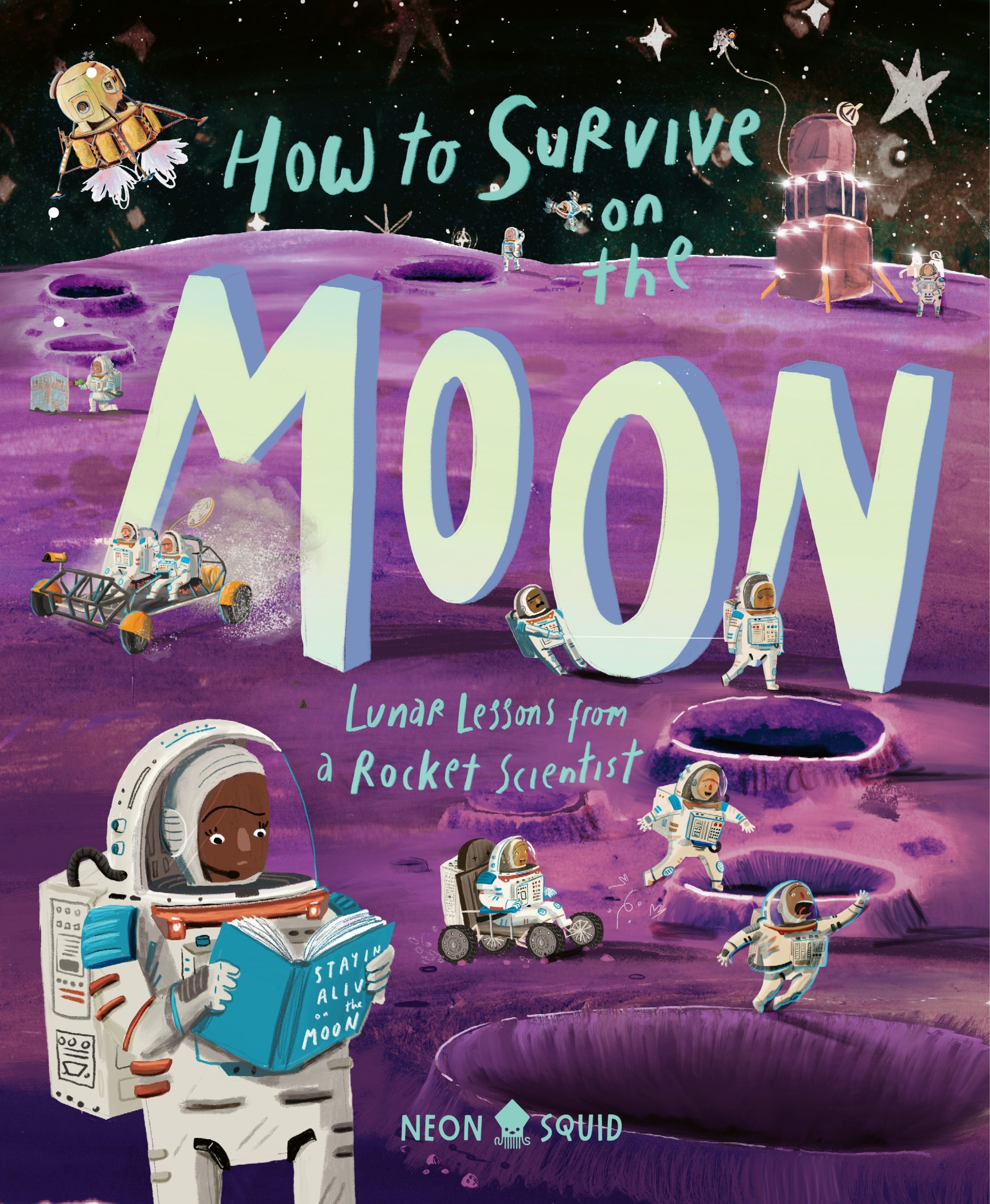
Today we are very excited to share an interview with Author Joalda Morancy (How to Survive on the Moon: Lunar Lessons from a Rocket Scientist)!
Meet the Author: Joalda Morancy
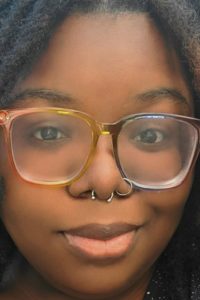
Joalda Morancy is an astrophysicist and space communicator who appears on Reach: A Space Podcast for Kids. Joalda loves doing science communication to the general public, and is passionate about inspiring kids and teens who come from underrepresented backgrounds to study STEM subjects, especially space science.
Website * Instagram * X * BlueSky
About the Book: How to Survive on the Moon: Lunar Lessons from a Rocket Scientist
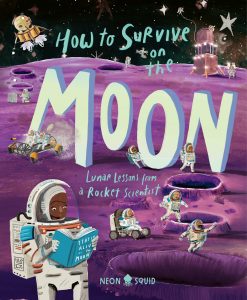
An illustrated guide to lunar survival for kids from rocket scientist Joalda Morancy in preparation for the upcoming NASA Artemis moon missions!
Humans are heading back to the moon. But once we get there, how on the moon will we stay alive? In this practical guide, future astronauts will learn how to build underground cities in lava tubes, shield themselves from razor-sharp moon dust, and grow the food they’ll need to survive life away from our home planet.
As well as practical tips, Morancy lifts a lid on some of the coolest developments in lunar science—including the possibility of building underground cities in lava tubes and the giant catapult that could be used to get stuff back to Earth.
Like Andy Weir’s The Martian everything in this space book is based on real, groundbreaking science. And no one is better placed to write it: when they’re not writing kids’ books, Joalda Morancy is building the lunar lander the Artemis missions will use to take astronauts—including the first woman and first person of color—to the surface!
Hilarious illustrations by award-winning artist Aaron Cushley, including graphic novel elements, convey the wonder and excitement of future space travel and give this book a key point of difference from other solar system books.
~Author Chat~
YABC: What sparked your interest in writing about this topic?
My interest in writing about a trip to the Moon is partially inspired by my lifelong interest in space exploration and the work I do every day for my job. I have always been intrigued by the idea of what it would look like to live on another celestial body other than Earth and understand what it would take for us humans to survive an environment that is wildly different from the one we were born in. Also, these are similar questions to what I must tackle at work every day as we build up our lunar landers. For example, we’re actively thinking about how we can ensure that we land humans and cargo safely and softly enough on the surface to enable further exploration. In all, it’s safe to say that landing on the Moon frequently occurs in my mind!
YABC: What kind of research did you do?
A lot of the research for this book came from a variety of sources, including academic papers, primary NASA documents, research articles, and more. A lot of our current understanding of the Moon is based on observations from satellites, small lunar landers, and Apollo missions from the 60s and 70s. This helped inform some of the more known and concrete facts about the Moon, though, for more of the futuristic pieces of the book (such as how to live in a lava tube or use a space elevator), I heavily relied on academic research pieces from scientists and engineers to understand how those ideas could potentially work.
YABC: How do you make sure the book is both informative and engaging for your intended audience?
I believe that this is one of the most challenging parts of writing, as it can be pretty tricky to provide educational information while keeping the delivery super exciting. I think the number one thing I try to do is balance the amount of new information I provide in the book with playful discussion and ensure that the content is not overly technical. It’s important that readers feel welcomed and not too overwhelmed by the content of the book, which the above techniques I mentioned help support.
YABC: How do you decide which visuals will best support the content and keep readers engaged?
I usually like to imagine what exact visuals match the kind of words and sentences I’ll be putting on a specific spread. After that, I usually try to think of specific details that would make those visuals a bit more engaging, so for example whether that means to include some sort of humor aspect in the illustration.
YABC: What other topics are you interested in exploring in future nonfiction projects?
During my undergraduate career I pursued a degree in astrophysics and also dabbled in a bit of planetary science. It would be awesome to do a book exploring things in those topics, for example I especially love thinking about black holes and their characteristics. I think it would also be fun to explore more technology related ideas, such as robotics and machine learning.
YABC: Were there any surprising things you learned about the topic during your research?
When I was working on the spread focusing on growing food on the surface of the Moon, I was surprised to have learned about how much ongoing research there is into growing plants directly in lunar regolith. I had no idea that this was even remotely possible, since no one really thinks about how plants could adapt to extreme environments outside of Earth. It was especially exciting to learn that the research looks promising enough that there may be a potential future where astronauts are regularly maintaining greenhouses with plants grown in lunar soil.
YABC: What’s one fact or story from the book that you’re especially excited for readers to discover?
I think the spread focusing on dust mitigation is especially interesting, because it isn’t really a fact that many people know much about or consider. The regolith on surface of the moon is very dusty, hazardous, and sticky, meaning we have to think of ways to minimize how much of it gets everywhere. I’m interested in readers learning about this topic as its an example of an aspect of a different celestial body that we might not think about or take for granted here on Earth, so it forces them to think about how different these worlds are.
YABC: What is your favorite reading space?
To be completely honest, I love just laying on my couch in a cozy blanket to read! Tons of peace and quiet at home (besides listening to my cats vocalize their need for food every now and then), which makes it one of my favorite spots. Otherwise, I sometimes try to go to some outdoor space if its nice outside and enjoy my surroundings of nature.
YABC: What hobbies do you enjoy?
I love keeping myself preoccupied with various activities, so I have a few hobbies I like to keep up with. Sports wise I’ve been doing a lot of snowboarding and badminton, and soon will be trying out rowing. I also love playing the saxophone and participate in a local community band. When I have the time, I try to get in some leisure reading and creative writing. Then of course, hanging out with friends is always something I try to make some time for!
Title: How to Survive on the Moon: Lunar Lessons from a Rocket Scientist
Author: Joalda Morancy
Illustrator: Aaron Cushley
Release Date: 2/4/2025
Publisher: Neon Squid
Genre: Nonfiction
Age Range: 8-10