About This Book:
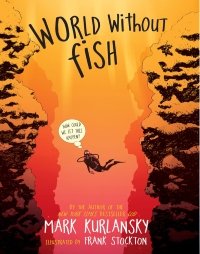
World Without Fish is the uniquely illustrated narrative nonfiction account—for kids ages 8 to 12—of what is happening to the world’s oceans and what they can do about it.
Written by master storyteller Mark Kurlansky, World Without Fish connects all the dots—biology, economics, evolution, politics, climate, history, culture, food, and nutrition—in a way that kids can really understand.
The book describes how the fish we most commonly eat, including tuna, salmon, cod, swordfish—even anchovies—could disappear within fifty years, and the domino effect it would have: the oceans teeming with jellyfish and turning pinkish orange from algal blooms, the seabirds disappearing, then reptiles, then mammals.
Explore the back-and-forth dynamic of fishermen—the original environmentalists and scientists—who not that long ago considered fish an endless resource. Learn why fish farming is not the answer and why sustainable fishing is, and how to help return the oceans to their natural ecological balance.
Interwoven with the book is a twelve-page graphic novel to keep young readers engaged. Each beautifully illustrated chapter opener links to the next to form a larger fictional story that perfectly complements the text.
*Review Contributed By Karen Yingling, Staff Reviewer*
Deep problems in the deep sea
Along with the text, there are plentiful sidebars explaining some topics, from leatherback sea turtles to the Atlantic herring to The Illustrated London News! I love that Kurlansky knew that some of these topics would need additional explanation to young readers. There are some maps and illustrations to support the text as well.
Between chapters, there is also a one page comic style story about a scientist, Kram, and his daughter, Ailat, as they investigate the fate of the fish and ocean over their lifetimes. It wasn’t until I read the dedication at the back that I realized these characters were based on the author and his daughter Talia.
I was glad to see that while no one should eat shark or bluefin tuna (because of the environmental impact), regular canned tuna is okay, although sardines are a fish that could use more consumers. There are good end notes about actions that young readers can take, including walking more instead of driving, and cutting down on plastic consumption. There is also a list of organizations that can help with various problems, as well as notes on how to start participating in climate activism.