
For fans of The Book Thief and The Boy in the Striped Pajamas comes a lushly illustrated novel about a teen Holocaust survivor, who must come to terms with who she is and how to rebuild her life. "A tour de force. This powerful story of love, loss, and survival is not to be missed." --KRISTIN HANNAH, #1 New York Times bestselling author of The Nightingale After losing her family and everything she knew in the Nazi concentration camps, Gerta is finally liberated, only to find herself completely alone. Without her Papa, her music, or even her true identity, she must move past the task of surviving and onto living her life. In the displaced persons camp where she is staying, Gerta meets Lev, a fellow teen survivor who she just might be falling for, despite her feelings for someone else. With a newfound Jewish identity she never knew she had, and a return to the life of music she thought she lost forever, Gerta must choose how to build a new future. "What the Night Sings is a bookfrom the heart, of the heart, and to the heart. Vesper Stamper's Gerta will stay with you long after you turn the last page. Her story is one of hope and redemption and life -- a blessing to the world." -- Deborah Heiligman, award-winning author of Charles and Emma and Vincent and Theo
- Books
- YA Fiction & Indies
- Young Adult Fiction
- What the Night Sings
What the Night Sings
Author(s)
Publisher
Age Range
12+
Release Date
February 20, 2018
ISBN
978-1524700386
Buy This Book


For fans of The Book Thief and The Boy in the Striped Pajamas comes a lushly illustrated novel about a teen Holocaust survivor, who must come to terms with who she is and how to rebuild her life. "A tour de force. This powerful story of love, loss, and survival is not to be missed." --KRISTIN HANNAH, #1 New York Times bestselling author of The Nightingale After losing her family and everything she knew in the Nazi concentration camps, Gerta is finally liberated, only to find herself completely alone. Without her Papa, her music, or even her true identity, she must move past the task of surviving and onto living her life. In the displaced persons camp where she is staying, Gerta meets Lev, a fellow teen survivor who she just might be falling for, despite her feelings for someone else. With a newfound Jewish identity she never knew she had, and a return to the life of music she thought she lost forever, Gerta must choose how to build a new future. "What the Night Sings is a bookfrom the heart, of the heart, and to the heart. Vesper Stamper's Gerta will stay with you long after you turn the last page. Her story is one of hope and redemption and life -- a blessing to the world." -- Deborah Heiligman, award-winning author of Charles and Emma and Vincent and Theo

Editor reviews
3 reviews
Overall rating
5.0
Plot
5.0(2)
Characters
5.0(2)
Writing Style
5.0(2)
Illustrations/Photos (if applicable)
5.0(1)
What the Night Sings
(Updated: June 12, 2026)
Overall rating
5.0
Plot
5.0
Characters
5.0
Writing Style
5.0
Illustrations/Photos (if applicable)
5.0
Greta used to play the viola every day and dreamed of being an opera singer. Her dreams were all shattered when she and her father were taken by the Germans and placed in concentration camps. Greta never knew she was, in fact, Jewish, and that her father never told her to protect her. Later, after the war, Greta goes to a Displacement Camp. She fears her voice is lost. Then she meets another Holocaust survivor, Lev, whose stories stir something deep within her. Can Greta move forward after all the horrors of the war? She needs to find the faith in herself, and her musical talent is one step on this journey.
What worked: Wowza, wow. This is such a powerful, unflinching story of the Holocaust and the Displacement Camps. It's also a story of survival and faith in moving forward after everything has been taken from you.
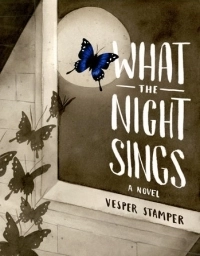
Readers follow Greta as a child being trained to not only play the viola but to become a future opera singer. Greta lives with her father and stepmother. She is also unaware that she is Jewish. Then the Gestapo seizes her and her father, sending them to Theresienstadt, which is a propaganda camp to show the world that Hitler isn't killing the Jewish people. All of it is lies. Then, Greta is sent to Auschwitz, where she loses her only family member to the crematoriums. What adds to this story is the equally powerful illustrations. Each one not only shows the hints of cruelty, but there's also hope. The butterflies, for example, symbolize hope. A hope that Greta loses and takes time to regain.
The author also shows the Displacement Camps, which emerged after the war. Many survivors, including Greta, ended up there after being freed from the concentration camps. This is where Greta meets Lev, who will play a big part in her life.
The relationship between Greta and Lev starts as a friendship. They share one commonality of being survivors of the Holocaust. Lev is a devout Jew, while Greta never knew she was Jewish. It's the devotion Lev has when he nurses her back to health, and a string of letters that touches her. There's also mention of Palestine and how many resettle there.
It's been over eighty years since the Holocaust, and with it, more of the survivors are no longer with us. I remember while in college, a Holocaust survivor visiting my college and sharing her story. She told us that she did this in the hopes that what she lost during that horrific time would never happen again. The saying that those who forget history are bound to repeat it is very true. This story needs to be told.
Stirring powerful historical of loss, love, and survival. A must-read for any high school classroom. Also, I highly recommend for any school library. This story will stay with readers long after they finish the last page.
What worked: Wowza, wow. This is such a powerful, unflinching story of the Holocaust and the Displacement Camps. It's also a story of survival and faith in moving forward after everything has been taken from you.
Readers follow Greta as a child being trained to not only play the viola but to become a future opera singer. Greta lives with her father and stepmother. She is also unaware that she is Jewish. Then the Gestapo seizes her and her father, sending them to Theresienstadt, which is a propaganda camp to show the world that Hitler isn't killing the Jewish people. All of it is lies. Then, Greta is sent to Auschwitz, where she loses her only family member to the crematoriums. What adds to this story is the equally powerful illustrations. Each one not only shows the hints of cruelty, but there's also hope. The butterflies, for example, symbolize hope. A hope that Greta loses and takes time to regain.
The author also shows the Displacement Camps, which emerged after the war. Many survivors, including Greta, ended up there after being freed from the concentration camps. This is where Greta meets Lev, who will play a big part in her life.
The relationship between Greta and Lev starts as a friendship. They share one commonality of being survivors of the Holocaust. Lev is a devout Jew, while Greta never knew she was Jewish. It's the devotion Lev has when he nurses her back to health, and a string of letters that touches her. There's also mention of Palestine and how many resettle there.
It's been over eighty years since the Holocaust, and with it, more of the survivors are no longer with us. I remember while in college, a Holocaust survivor visiting my college and sharing her story. She told us that she did this in the hopes that what she lost during that horrific time would never happen again. The saying that those who forget history are bound to repeat it is very true. This story needs to be told.
Stirring powerful historical of loss, love, and survival. A must-read for any high school classroom. Also, I highly recommend for any school library. This story will stay with readers long after they finish the last page.
Good Points
1. Powerful, unflinching story of the Holocaust and Displacement Camps
2. Important story that needs to be told
2. Important story that needs to be told

An Incredible Book
(Updated: June 12, 2026)
Overall rating
5.0
Plot
5.0
Characters
5.0
Writing Style
5.0
Illustrations/Photos (if applicable)
N/A
Gerta Rausch didn’t know she was Jewish until she and her father were taken from their home in the middle of the night, packed into a train’s freight car, and taken to Theresienstadt. Papa and Gerta’s step-mother, a famous opera singer, had sheltered Gerta by homeschooling her and immersing her in musical training. In the camps, Gerta translates that training into odds-defying survival even after she’s moved to both Auschwitz and Bergen-Belsen.
WHAT THE NIGHT SINGS opens with the liberation of Bergen-Belsen by British soldiers as Gerta quietly sings to her bunkmate, Rivkah, as Rivkah dies. Gerta describes herself as “…a skeleton of a sea creature, dropped in this tide pool, living, watching, still living.” The rest of the book details Gerta’s post-liberation existence in a camp for those who are displaced after the war ends and reminiscences of her life before Nazis destroyed it. The story is enhanced by the letters Gerta receives from her friend, Lev, as well as the conversations they share in which Lev details his experiences growing up in a religious community in Poland and his life in the camps.
WHAT THE NIGHT SINGS by Vesper Stamper is a brilliant book. Stamper’s writing is straightforward, powerful, and lyrical. The illustrations are stark, and they have incredible depth. The characters offer nuanced perspectives of the Holocaust and its aftermath, and though the story is dark and full of pain, loss, hatred, and sorrow, it’s also a tale of hope and love.
As we lose many of the survivors of the Holocaust, stories like the one Stamper tells are especially important, and it’s vital to get books like this one into the hands of middle grade and YA readers (though it’s certainly great for adults to read, too). I’d like to see WHAT THE NIGHT SINGS in every library and book store—there’s historical benefit, of course, and reading it while keeping global current events in mind serves as a call to action. In the words of George Santayana, “Those who cannot remember the past are condemned to repeat it.”
Many thanks to the publisher and YA Books Central for a copy of the book in exchange for my honest review.
WHAT THE NIGHT SINGS opens with the liberation of Bergen-Belsen by British soldiers as Gerta quietly sings to her bunkmate, Rivkah, as Rivkah dies. Gerta describes herself as “…a skeleton of a sea creature, dropped in this tide pool, living, watching, still living.” The rest of the book details Gerta’s post-liberation existence in a camp for those who are displaced after the war ends and reminiscences of her life before Nazis destroyed it. The story is enhanced by the letters Gerta receives from her friend, Lev, as well as the conversations they share in which Lev details his experiences growing up in a religious community in Poland and his life in the camps.
WHAT THE NIGHT SINGS by Vesper Stamper is a brilliant book. Stamper’s writing is straightforward, powerful, and lyrical. The illustrations are stark, and they have incredible depth. The characters offer nuanced perspectives of the Holocaust and its aftermath, and though the story is dark and full of pain, loss, hatred, and sorrow, it’s also a tale of hope and love.
As we lose many of the survivors of the Holocaust, stories like the one Stamper tells are especially important, and it’s vital to get books like this one into the hands of middle grade and YA readers (though it’s certainly great for adults to read, too). I’d like to see WHAT THE NIGHT SINGS in every library and book store—there’s historical benefit, of course, and reading it while keeping global current events in mind serves as a call to action. In the words of George Santayana, “Those who cannot remember the past are condemned to repeat it.”
Many thanks to the publisher and YA Books Central for a copy of the book in exchange for my honest review.
Good Points
Amazing illustrations
An important story
An important story

User reviews
There are no user reviews for this listing.
Already have an account? Log in now or Create an account
Latest Additions














GET A YABC BUTTON!


We have all sorts of YABC buttons for your website. Grab one here and link to YABC!