YA Review: Seventeenth Summer (Maureen Daly)

About This Book:

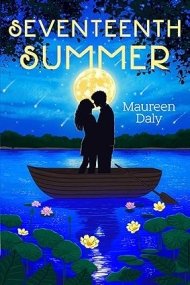
First published in the 1942, Seventeenth Summer is considered the first young adult novel. Now with refreshed text and a brand-new look, this timeless, sweeping romance is perfect for fans of Morgan Matson and Jenny Han.

Angeline “Angie” Morrow always thought high school romances were just silly infatuations that come and go. She certainly never thought she would fall in love. But when she’s asked out on her first date by the school basketball star, Jack Duluth, their connection is beyond any childish crush.

Suddenly, Angie and Jack are filling their summer with stolen moments and romantic nights. But fall is coming—Angie is going off to college in Chicago, while Jack is planning to move to Oklahoma to help with the family bakery—and they must figure out if their love is forever, or just a summer they’ll never forget.

*Review Contributed by Karen Yingling, Staff Reviewer*

It’s 1942, and Angie has just graduated from a private high school in Fond Du Lac, Wisconsin. She’s planning on going to college in Chicago, along with her sister Lorraine. Older sister Margaret has graduated, is engaged to Art, and working, while younger sister, Kitty, is ten. A chance encounter with Jack, who went to the public high school, eventually ends with him asking her for a date. The two go sailing on the lake along with Jack’s friend, Swede, and enjoy talking. As the summer wears on, the two spend more and more time together, and Angie waits breathlessly for him to call her. There is a small misunderstanding when she goes out with Tony, and Jack avoids her– Tony is a “fast boy”, and everyone knows that Angie is not that kind of girl. The two manage to work out the misunderstanding. It’s a slow, hot summer, and in between dates with Jack, Angie’s activities are limited to chores at home like hanging out the laundry, mending, and helping with the Sunday roast and mashed potatoes. There is some concern about the man that Lorraine is dating, but Angie is too busy musing about how wonderful the summer is to think too much about how Martin treats her sister. While she has a good time with Jack, she has some concerns. He doesn’t read much (he played sports in high school), and he isn’t planning on going to college because he needs to help with the family bakery. Still, it’s nice to go out with him, and to occasionally be kissed in broad daylight! When Jack tells her that he loves her, it’s thrilling, but Angie can’t see herself in a long term relationship with someone who clicks his spoon accidentally against his teeth when he’s eating ice cream, even if he does break his dinner roll into four pieces. When the summer turns to fall, she realizes that life will go on without him, but is able to look back with fondness of her seventeenth summer.

Good Points
While this isn’t necessary the romance that modern readers will want, it is an exquisite piece of historical fiction. The descriptions of every day occurrences are almost as lyrical as Wilder’s Our Town (which Jack hasn’t read!), and describe memories that very few people have nowadays. Having mashed potatoes on Sunday even when it’s hot, driving around looking for a cool place to have a picnic, or waking up on a summer morning when the windows are all open and the sunshine is pouring in are all vividly described. This is set Angie’s entire lifetime after Ray Bradbury’s Dandelion Wine (which describes the summer of 1928), but is just as poetic.

The nascent romantic feelings are still there, but they probably would describe the way twelve year olds today feel, rather than young women who have graduated from high school. There are many outdated conventions; Angie goes out with Jack, who suggests she try a beer, which she does. She won’t sit with it on the table in front of her, however, because she can’t feel like a lady. There is a note at the beginning of the book about the treatment of various racial groups, being correct to the time but always incorrect in terms of civility. It says that the writing was left the same, but I wasn’t able to compare it to the original.

I’m a huge fan of vintage literature; it’s hard to understand our own time without knowing what the past was like. There are several that I find indispensable when trying to get middle school students to understand what the world was like when my mother was in high school. These include Cleary’s Fifteen, Cavanna’s Going on Sixteen, Wilson’s Always Anne, and du Jardin’s Dinny Gordon.

*Find More Info & Buy This Book HERE!*