About the Book:
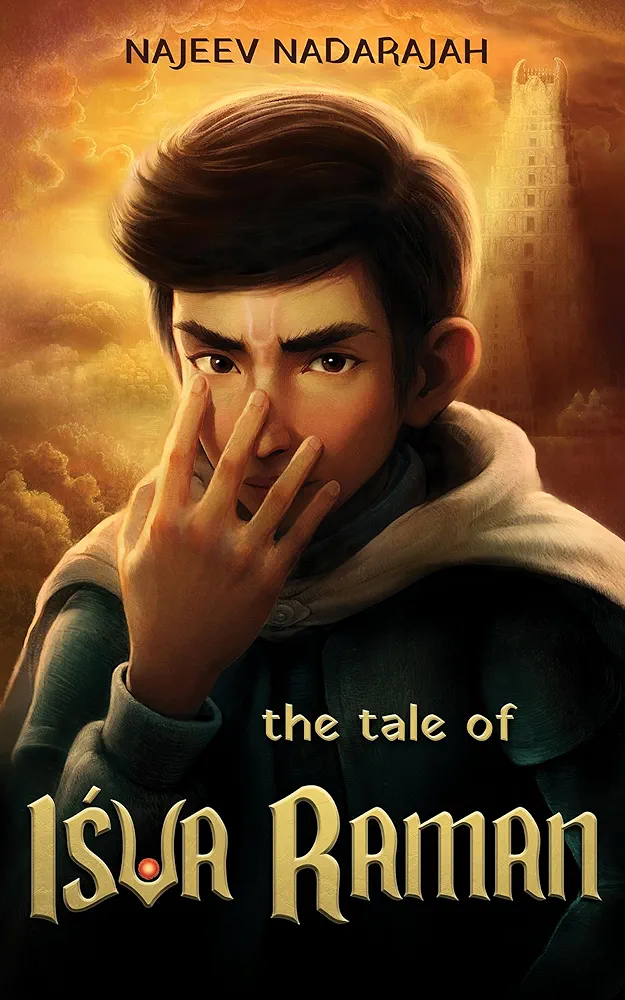
One stormy afternoon, Iśva Raman is waylaid by a demon Asura, who demands that he surrender the Seed. Raman, however, has never heard of this Seed.
Confused and frightened, Raman is whisked away to a hidden temple where he learns about his accursed past and the incredible power of the Cosmic Seed. With the fate of the world at stake, Raman must find a way to keep the Seed out of the hands of the Asuras, or risk losing everything he holds dear.
Filled with ancient magic, mythical demons, friendships, plot twists, and plentiful humour, The Tale of Iśva Raman is a must-read for fans of coming of age teen fantasy books like Eragon and Harry Potter. Don’t miss out on this epic adventure. And get ready to embark on a journey that will leave you breathless until the very last page!
*Review Contributed by Mark Buxton, Staff Reviewer*
What worked:
The story is reminiscent of Percy Jackson or Harry Potter books, because Raman learns the truth about his heritage and the powers locked inside. He even has a burn mark on his forehead! He travels to a world he didn’t know existed to attend a magical school. Harry Potter could have joined Slytherin, and Raman has the potential to become evil or heroic. Controlling his anger will be the deciding factor. Early parts of the story describe things that are “impossible” or have never happened before, so readers will anticipate Raman doing them. Even though the plot bears similarities to other middle-grade novels, it adds its own differences, allowing it to stand apart.
The book is based on Hindu mythology and legend, but it’s set in Canada before shifting to the Temple of the Heart Spring. A large part of the plot involves rakshasas, which are Hindu demons. Raman always thought they were malevolent creatures, but he learns many of them are good. The rakshasas have different strength levels, with the windbear near the bottom and crocotta near the top. Uumadndii are creatures delivering messages, while vanara are servants at the academy. Students at the academy are training to become Kshatriyas who will protect the world from Asuras. A large conflict is the fact that Raman has the potential to become either a Kshatriya or an Asura. Could he be both?
The story features several underdogs, with Raman heading the group. He arrives at the academy to master control of his Shakti, which will allow him to guide his bonded rakshasa in battle, a windbear that can’t fly! However, he unofficially bonds with a nine-tailed agriwolf, which should have been impossible. Bullies at the academy, including two of his roommates, disrespect other students and staff, and Raman frequently steps up to confront them. Readers are aware that Raman has a connection to the legendary Seed, although no one has much of an idea exactly what it is. He’s also attracted to a vanara named Sita, but relationships with vanara are forbidden. The children of a Kshatriya and a vanara will have tainted blood and become Asuras. These problems are only a hint at the troubles awaiting Raman.
What didn’t work as well:
The amount of Hindu vocabulary may overwhelm some readers, but it’s just a matter of becoming acclimated to it. The word meanings are fairly easy to understand, so it’s not a big deal.
The final verdict:
Readers won’t want to put the book down, which is high praise for any author. The Amazon listing indicates this book is for young adults, but there’s nothing too mature to make it inappropriate for middle grades. The plot builds to an exciting, dramatic climax, and I highly recommend you give this book a shot.
*Find More Info & Buy This Book HERE!*