Today we are very excited to share an interview with author Michelle Kadarusman!
Read on to learn more about the author, the book, and a giveaway!
Meet the Author: Michelle Kadarusman

Michelle Kadarusman is a Canadian-based children’s author, who spends part the year in Australia. She is twice-nominated for a Governor General’s Literary Award and her work has been translated into Spanish, German, Japanese and Turkish. Her middle-grade novels have earned many nominations and honors, including the Freeman Book Awards, TD Award for Children’s Literature, Green Earth Books Awards, USBBY Outstanding International Books and Malka Penn Award for Human Rights in Children’s Literature. She’s originally from Australia and Indonesia.
About the Book: Seabird
YABC: What gave you the inspiration to write this book?
Kartini herself! She was a Javanese girl living in the 19th century, struggling under the constraints of tradition and colonization, who was able to transcend the limiting life that was handed to her. She has long been an inspiration to me. I grew up with an Indonesian father who was fiercely proud that his country had fought for and gained its independence from the Dutch when he was a boy. When I was young, I could appreciate the source of his pride, but the idea of being colonized remained confusing. Reading Kartini’s published letters and how she felt helpless as a “subject” while she also idolized the modern concepts and intellectual ideas that the Dutch culture represented for her helped me understand the complexity of my own family’s history.
YABC: Who is your favorite character in the book?
Kartini’s dream for independence and her unwavering spirit to fight for what is fair, I find eternally inspiring. Kartini was caged by cultural traditions, while her country was caged by its colonizers. And yet this young woman, utterly powerless, managed to voice her longing for a life different to the one she was expected to lead.
ABC: Which came first, the title or the novel?
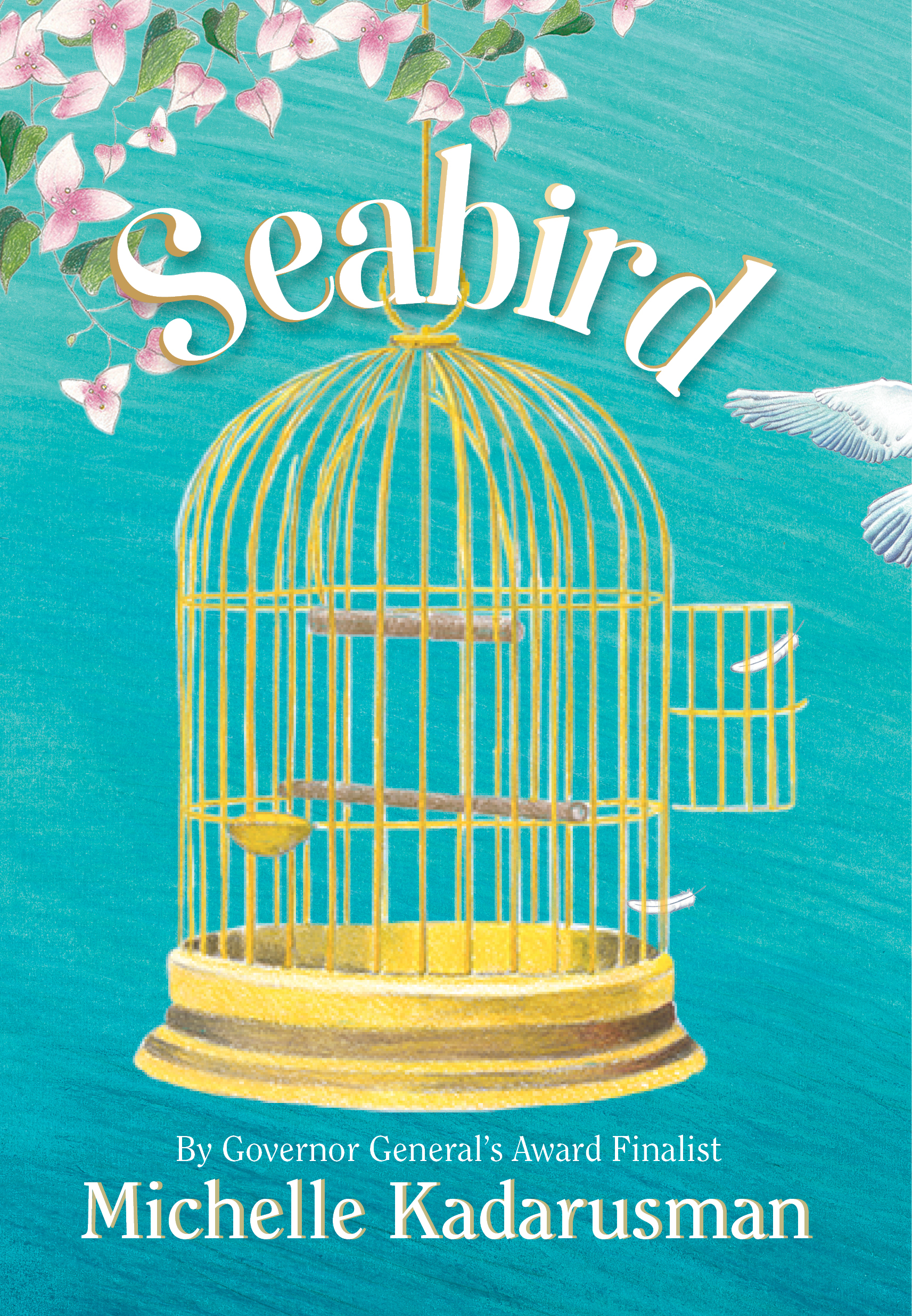
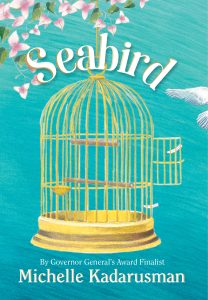
The story was written before the title. My working title for the years of research and first draft of the project was simply (and unimaginatively) Kartini. When I was working on my second draft, I started to think about what the title should be and the imagery immediately came to mind of the caged birds and the seabirds mentioned in the text. It was a lovely moment for me to name the manuscript Seabird as it evoked such a sense of freedom.
YABC: What scene in the book are you most proud of, and why?
There is a scene toward the end of the novel where Kartini is able to articulate to a European woman her desire, not to be a Dutch girl, but a proud Javanese girl with the same freedoms as a Dutch girl. The distinction is very important in the context of being colonized, but also for the character’s growth as a young woman.
YABC: Thinking way back to the beginning, what’s the most important thing you’ve learned as a writer from then to now?
To trust my own voice. As a new writer I often rushed myself and too often second guessed my instincts. Nowadays, I make a point to slow down the process and distill for myself what I want to convey, then I do my best to stick to it.
YABC: What do you like most about the cover of the book?
Tara Anderson illustrated a beautiful cover for Seabird. I especially love that the illustration is spread over the front and back covers so it tells a story all on its own.
YABC: What new release book are you looking most forward to in 2025?
I can’t wait to read Colleen Nelson’s middle grade fiction due in November called How to Save a Library. I love Colleen’s work; she has such a wonderful empathy and understanding of the middle grade reader.
YABC: What’s a book you’ve recently read and loved?
I’m currently reading books in preparation for my next project which is set in Tasmania, Australia. I just finished a stunning book by Tasmanian author Robbie Arnott called Dusk. His descriptions of the settings are so beautifully captured. I was excited to learn that he has other books that I can dive into.
YABC: What’s up next for you?
I plan to write a sequel to a novel I released in 2020, a book called Music for Tigers, which is set in Tasmania, Australia, and centers around an extinct animal called the Tasmanian Tiger (thylacine). I haven’t written a sequel to any of my previous novels, so this will be the first time!
YABC: Which was the most difficult or emotional scene to narrate?
It was difficult in general to be in the mindset of Kartini’s gender-based suppression. The rights that I take for granted for myself and my daughter: social, educational and emotional equalities, were not realities for Kartini and her sisters. Certainly, these are rights we must continue to value and uphold.
YABC: What is the main message or lesson you would like your reader to remember from this book?
Essentially Seabird is a story about a young girl looking around at her world and recognizing the staggering imbalance of power. Whether it was one country ruling another, brother favored over sister, or the hypocrisy of being so-called “high born”, Kartini observed and voiced the great unfairness of it all. The message I would like my young readers to remember is no matter how powerless you might feel, like Kartini, you can still have great impact, simply by expressing your own truth.
YABC: What would you say is your superpower?
Perhaps not a superpower, but I’ve come to learn what I can do to reset or rebalance myself so that I can feel my best. For many years I’ve had a walking meditation practice that for me works just like a superpower. Also, I’m very good at parallel parking 😉
YABC: What advice do you have for new writers?
To all new writers I say: Remember that your voice is unique. No one will tell the story like you can. Trust your voice.