About This Book:
A child of immigrants feels caught between two worlds and two selves in this “nuanced and inspiring” (Kirkus Reviews) middle grade historical novel about self-determination, community, and what it means to belong—perfect for fans ofEsperanza Rising and Katherine Marsh’s The Lost Year.
When your family comes from Eastern Europe, you get used to being called a Bohunk—someone who’s ignorant, lazy, and still has Old World farm dirt in their ears. Someone from a place that people don’t care enough about to learn its real name.
Stanislava feels stuck in her deeply traditional Slovene community in Colorado in 1910. But when she finds a library book about an immigrant girl’s college adventure, she discovers a dazzling world of opportunity. She’s desperate to be like the book’s heroine, Katinka, who starts life anew as Katie and is seemingly living the American dream. So, like Katie, Stanislava adopts an “American” name: Sylvia.
Sylvia fantasizes about escaping her claustrophobic life and going off to college—until her dreams are shattered when her older sister, Stina, elopes with a man their family disapproves of. Now Sylvia finds herself at a crossroads: quit school to fill Stina’s role as the family’s caretaker or run away from home. Stanislava would do the former. But Sylvia is determined to be free…
*Review Contributed By Karen Yingling, Staff Reviewer*
Embracing Opportunities in the Early 1900s
This is the kind of historical fiction book that I absolutely adored as a tween reader; my favorite Wilder book was Little Town on the Prarie because Laura has a job. I grew up knowing that an education was all that stood between me and backbreaking work on a farm, since both of my parents came from agricultural backgrounds. Today’s children don’t have the same concept of how important an education is. The details of everyday life in 1910 are perfect; I was vaguely wondering why washing the walls was so important when Stanislava mentioned that the coal smoke made everything grimy! Perfect. The inclusion of a penny library, and of Katie Arthur at Knowlton College was also fantastic; I’ve read several books from this era through Project Gutenberg, and it’s surprising to see how forward thinking some of the literature was. Oh! This was a little bit like Grace Livingston Hill’s work, but without the heavy Christian themes. I would have absolutely worn out a copy of this when I was twelve, and it has enough adventure in it that I’m sure I can get readers who enjoyed Albus’ A Place to Hang the Moon and Elliot’s Bea and the New Deal Horse to read it!.
I know that terms like perjorative terms like “Bohunk” would have been used at the time, but it was uncomfortable to read. I could have used a few more descriptions of clothes and household furnishings as well, but that’s just me!
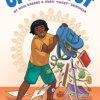
The Margarita Kukhtina cover is brilliant, and this is such a fun read. Readers who want to delve into this time period, or who enjoyed this author’s The Many Reflections of Miss Jane Deming or A Season Most Unfair will cheer on Stanislava’s attempts to make her way in the world!